The Degree That Turns 'I Love Kids' Into an Actual Paycheck
5th May 2026
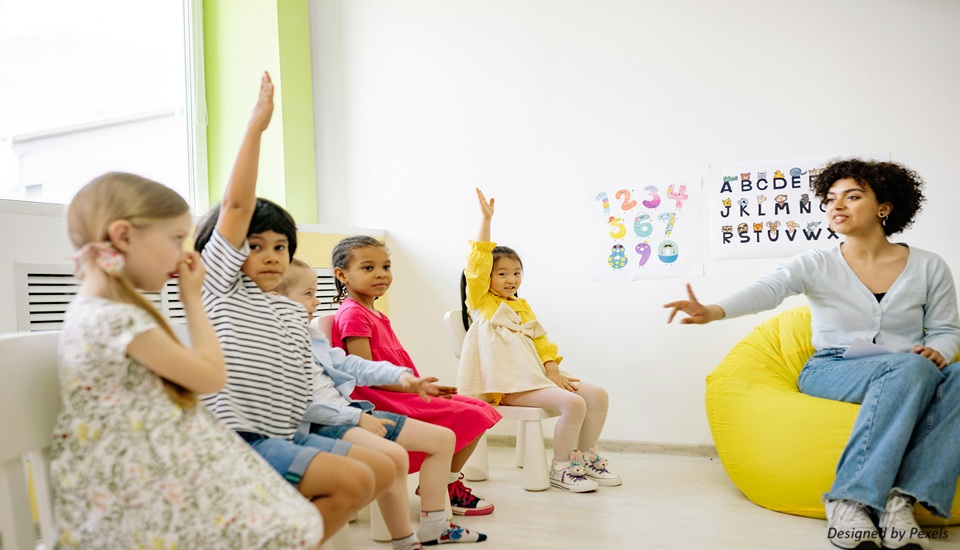
You love kids. Everyone knows it.
But at some point, someone — A parent, a friend, a well-meaning relative- looked at you and asked: "That's great, but what's the actual career plan?"
Fair question. And here's the thing, there's a very real, very structured answer to it.
It just comes in the form of a degree that most people underestimate.
Let's talk about what it actually takes to go from "great with kids" to qualified, hireable, and paid to teach them.
What Does It Actually Mean to Be Qualified to Teach Young Learners?
Loving children is the starting point. It is not the qualification.
Schools, whether in India, the UK, Australia, Canada, or the UAE, have become increasingly specific about who stands in front of a classroom. And rightly so. The early years of a child's education are the most formative, which means the teacher in that room carries enormous responsibility.
To meet that bar, educators need:
- A solid understanding of child development and learning psychology
- Knowledge of curriculum design appropriate to age groups
- Skills in classroom management that are firm but nurturing
- The ability to assess, observe, and adapt to each child's needs
- Credentials that schools and employers can actually verify
That's where formal education comes in, specifically, a degree-level qualification in education.
Why a Degree & Not Just a Certificate Changes Everything
There's nothing wrong with short courses. They build skills. They look good on a CV.
But a degree is a different category entirely. It signals:
- Long-term commitment to the profession
- In-depth theoretical and practical knowledge
- Eligibility for senior roles, school leadership, and international positions
- Compliance with teacher qualification standards in regulated education systems
In many countries, including the UK, Australia, Singapore, and increasingly the Gulf, a degree-level qualification is mandatory to teach in schools. Without it, you may hit a ceiling faster than you expect.
What a Strong B.Ed. in Primary and Secondary Education Actually Covers
Not all education degrees are built the same. The best programs go well beyond textbook theory, they prepare you for the actual complexity of a real classroom.
A well-structured B.Ed. in Primary and Secondary Education should equip you with:
- Theories of learning and child psychology:
Understanding how children learn at different developmental stages, not just what to teach them
- Educational technology
Knowing how to use digital tools effectively in a 21st-century classroom, rather than just being familiar with them
- Enquiry-based and project-based learning
Moving beyond rote instruction toward methods that build critical thinking
- Subject breadth
Spanning language, environmental studies, science, technology, art, and music, so you can teach across the curriculum
- Curriculum planning and design
For both primary and secondary learners, because the two stages require very different approaches
- Assessment methods
And critically, understanding the transition from primary to secondary education, which is a pressure point for many students
The most effective programs also embed classroom practice directly into the degree, structured hours of actual teaching, observed and documented, not as an afterthought, but as a core academic component carrying real credit weight.
Pair that with an action research component, where you investigate a real issue in education, apply evidence-based strategies, and reflect on your own teaching, and you have a qualification that is genuinely practitioner-ready.
Who Is This Degree Actually For?
This is worth addressing directly, because many people assume a B.Ed. is only for fresh graduates or school leavers.
It is not.
A well-designed B.Ed. program should be accessible to:
- Career changers from any academic background, education degrees typically accept applicants with qualifications in unrelated fields
- Working professionals in schools, childcare, or tutoring roles who want to formalise what they already do
- Graduates looking to enter teaching as a first career
- Internationally mobile individuals who want a credential recognised across multiple countries and school systems
Some programs even recognise prior learning and life experience as partial credit, which makes the pathway more realistic for adults who have been out of formal education for a while.
The key is flexibility. The best online B.Ed. Programs today are designed around the reality that most adult learners cannot simply stop their lives to study full-time for three years.
The Global Demand for Qualified Primary and Secondary Teachers Is Real
Here's a number worth pausing on:
According to the UNESCO Institute for Statistics (UIS), the world needs to recruit approximately 69 million new teachers by 2030 to achieve universal primary and secondary education, with Sub-Saharan Africa and Southern Asia facing the sharpest shortfalls. (Source: UNESCO Institute for Statistics)
This is not a saturated market. It is an undersupplied one.
Qualified teachers with internationally recognised credentials are actively sought across:
- South and Southeast Asia (India, Thailand, Indonesia, Singapore)
- The Middle East (UAE, Qatar, Saudi Arabia, Kuwait)
- Europe and the UK (particularly for international and bilingual schools)
- Africa (especially East and West Africa, where international schools are expanding rapidly)
- North America and Australia (with formal licensing pathways)
A bachelor of education in primary and secondary education is increasingly the threshold credential in all of these markets, not a bonus, but a baseline.
Why Accreditation Actually Matters
This is the part most people skip when choosing a program. Don't.
An education degree from an unaccredited or poorly recognised institution may look fine on paper, but the moment you apply to a reputable school or try to teach abroad, it will be scrutinised.
When evaluating any B.Ed. program, look for:
- Recognition by established international quality bodies, names like- ASIC (Accreditation Service for International Schools, Colleges, and Universities), QAHE, or EQAC, carries real weight with global employers
- Endorsement by Ofqual-regulated organisations, particularly relevant if you plan to teach in the UK or in international schools that follow British curricula
- University affiliation: The degree should be awarded by a recognised university, not just a training provider
- KHDA approval: Essential if you are targeting the UAE education market specifically
Accreditation is not a bureaucratic formality. It is what separates a qualification that opens doors from one that raises eyebrows.
What Does the Career Path Actually Look Like?
Here is what a realistic progression looks like for someone who completes a B.Ed. in primary and secondary education:
In the first 1–2 years:
- Primary or secondary school teacher (state, private, or international)
- Learning mentor or teaching coordinator
- Education consultant in curriculum or assessment roles
By years 3–5:
- Senior teacher or subject lead
- Curriculum developer
- Year group coordinator or head of department
Beyond that:
- Vice principal or head teacher
- Teacher, counsellor, or researcher
- Transition into postgraduate study, an MA in Education or a Doctorate, for those who want to move into academia, policy, or education leadership
Salaries vary significantly by country and school type. But one pattern holds consistently across markets: qualified teachers with internationally accredited degrees earn more, advance faster, and have more geographic flexibility than those without formal credentials.
The Bottom Line
"I love kids" is a wonderful starting point. But it becomes a career, a well-compensated, globally mobile, professionally respected one, when it is backed by the right qualification.
A well-chosen B.Ed. in Primary and Secondary Education program does not just give you a degree. It gives you the pedagogical knowledge, the practical classroom hours, the accredited credentials, and the professional standing to genuinely shape young lives and be recognised and compensated for doing so.
The global demand is real. The pathways are more flexible than ever. And the schools hiring right now are looking for exactly the kind of qualified, credentialed educators this degree produces.
The question is simply: Are you ready to make the move?
Frequently Asked Questions (FAQs)
Q: Do I need prior teaching experience to apply for a B.Ed.?
Most reputable B.Ed. in Primary and Secondary Education, do not require formal teaching experience as an entry condition. Some accept applicants with just a high school certificate, while others prefer a prior degree in any discipline. Prior learning credits may also be available.
Q: Is a B.Ed. Recognised for teaching internationally?
A B.Ed. from an accredited institution, particularly one holding recognition from bodies like ASIC, QAHE, or Ofqual-regulated endorsers, is widely recognised across international school networks. Always verify the specific recognition requirements of the country you intend to teach in.
Q: Can I complete a B.Ed. online while working?
Yes, if the program is designed for it. Look for flexible timelines (typically 18–36 months), live online sessions, and asynchronous study options. The best online programs are built around working adults, not traditional full-time students.
Q: What age group does this degree prepare me to teach?
A B.Ed. in primary and secondary education typically prepares you to teach learners aged 5 to 18, covering the full span from foundational primary years through to upper secondary.
Q: Can a B.Ed. lead to a master's degree later?
Absolutely. A B.Ed. is the natural foundation for postgraduate qualifications, including an MA in Education, M.Ed., or specialist degrees in areas like special education, TESOL, or education leadership.


