Montessori Classrooms Look Like Chaos but Work Like Magic: What's Really Going On
27th October 2026
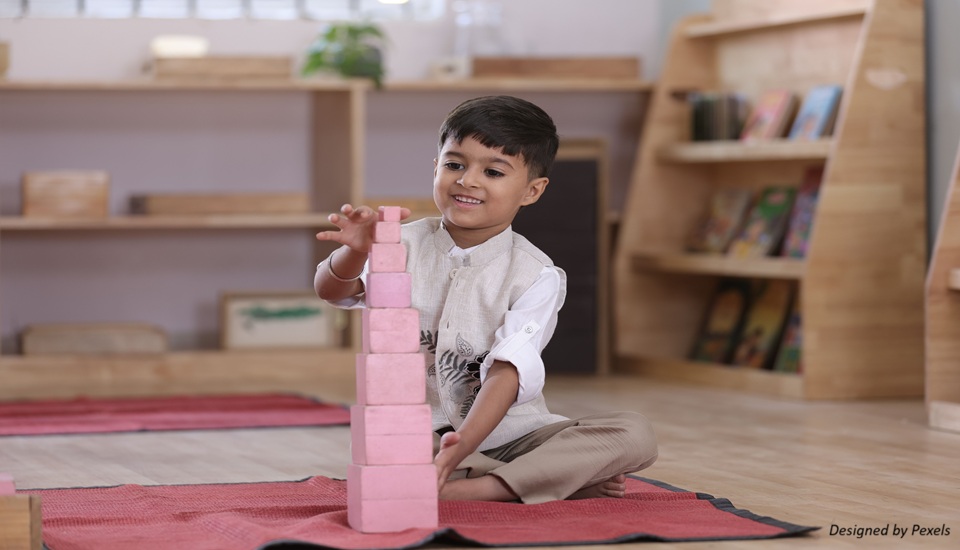
Walk into a Montessori classroom, and you may feel a little lost. Children are spread across the room. One is pouring water from a small jug. Another is tracing sandpaper letters. Two friends are laying out a long chain of beads on a rug. The teacher kneels beside a child and speaks in a soft voice.
No one sits in rows. No one is told what to do every five minutes. To a first-time visitor, it can look like chaos.
It is not. It is one of the most carefully planned learning spaces you will ever see. Let’s look at what is really going on.
It Starts with the Prepared Environment
Nothing in a Montessori room is random. Shelves are low so little hands can reach them. Materials are neat, complete and ordered from simple to complex. Furniture is child-sized. Every item has a place, and children learn to put it back.
This order gives children a sense of calm and control. When a room is predictable, a child can focus on the task instead of worrying about what comes next.
Freedom Within Limits
Here is where many people get confused. Montessori does not mean “do whatever you like.” It means freedom within clear limits.
A child can choose which activity to work on. But the choice comes from a set of options the teacher has prepared. Ground rules also stay firm:
- Treat people with respect.
- Handle materials with care.
- Finish what you take out, and return it.
These simple rules build self-discipline. Children learn that freedom comes with responsibility.
The Teacher Is a Guide, Not a Lecturer
In a Montessori room, the teacher does not stand at the front and talk for an hour. Instead, the teacher observes, introduces a new material to a child or small group, and steps back.
Good guides ask questions such as:
- What is this child ready for next?
- Is this task too easy or too hard?
- What is holding this child back?
This kind of close watching takes skill. The teacher is always working, even when the room looks quiet.
Hands-On Materials Make Ideas Real
Montessori materials are designed to teach one idea at a time. A child does not just hear that ten tens make a hundred. They hold the golden beads and feel the difference between a single unit and a full square.
Many materials also have a "control of error." This means the child can see whether the work is correct without asking an adult. Puzzle pieces fit, or they do not. A cylinder slots into its hole or it stays out. The child learns to check, fix and try again.
That habit builds confidence and independence.
Mixed Ages Create Natural Teamwork
Most Montessori classrooms group children across a three-year age span. At first, this seems odd. Over time, it makes perfect sense.
Younger children learn by watching older ones. Older children deepen their own understanding by helping the little ones. There is less comparison and less competition. Each child works at their own pace and sees learning as something shared.
The Long, Uninterrupted Work Cycle
Another quiet secret is the work cycle. Children are given a long block of time, often around three hours, to choose and complete their work without being stopped by a bell.
Why does this matter? Deep focus takes time to build. When a child is allowed to stay with a task until they feel done, concentration grows. Many parents are amazed to see a four-year-old working on one activity for forty minutes.
So What Do Children Gain?
When these pieces come together, children often show strengths such as:
- Independence. They learn to dress, clean up and solve small problems on their own.
- Focus. Long work cycles train the mind to stay with a task.
- Confidence. They trust their own ability to learn.
- Kindness. Mixed-age groups and shared spaces teach care for others.
- Love of learning. Curiosity stays alive because it is not forced.
These are life skills, not just school skills.
Why Trained Guides Matter
Here is the truth. A Montessori room only works well when the adult in it understands the method. Buying the right materials is not enough. A guide needs to know how to present each material, when to step in, how to observe and how to keep the environment calm and purposeful.
That is why formal training is so important. A structured PG Diploma in Montessori Teacher Training course teaches the philosophy, the child development theory and the hands-on practice behind the approach. You learn to demonstrate materials, plan the environment, observe children and talk with families. It also helps you handle real situations, such as a child who struggles to settle or a classroom that feels too noisy.
Strong training turns a nice idea into skilled, confident teaching.
Bottom Line
What looks like chaos at first glance is really a well-planned system. The prepared environment, hands-on materials, mixed-age groups and long work cycles all support children to learn with joy and focus. The guide quietly holds it all together.
If this approach speaks to you, a Post Graduate Diploma in Montessori Teacher Training Course can help you learn how to create these classrooms yourself. It gives you the skills to guide young learners with patience, respect and confidence. The magic is not magic at all. It is skill, and you can learn it.
FAQs
1. Do Montessori children learn to follow rules if they have so much freedom?
Yes. The freedom is always paired with clear limits, such as respecting others and caring for materials. Children learn self-discipline through routine, choice and responsibility instead of constant reminders.
2. Why do Montessori classrooms use mixed-age groups?
Mixed ages let younger children learn from older peers, while older children strengthen their knowledge by teaching. It reduces competition and helps each child progress at their own pace.
3. What does a Montessori teacher actually do all day?
The teacher observes each child, gives short lessons on new materials, prepares the environment and records progress. They guide instead of lecturing, so the work looks quiet but takes close attention and skill.
4. Can I become a Montessori teacher without a teaching degree?
Many Montessori training programmes welcome candidates from different backgrounds, though entry requirements vary by institution. Check the eligibility criteria of the programme you are interested in, and look for one that includes practical classroom experience.
Written By: Sanjana Chowdhury


